
Plants, flowers & gardens
What are succulents? Choosing your first plant for home
23.10.2026
Rosettes of fleshy leaves, sculptural stems and a small vessel beside a window: succulents can be striking without a single flower. Before choosing one from a photograph, consider where it will live. The available light and access for care should come first; the shape of the glass and colour of the stones can follow.
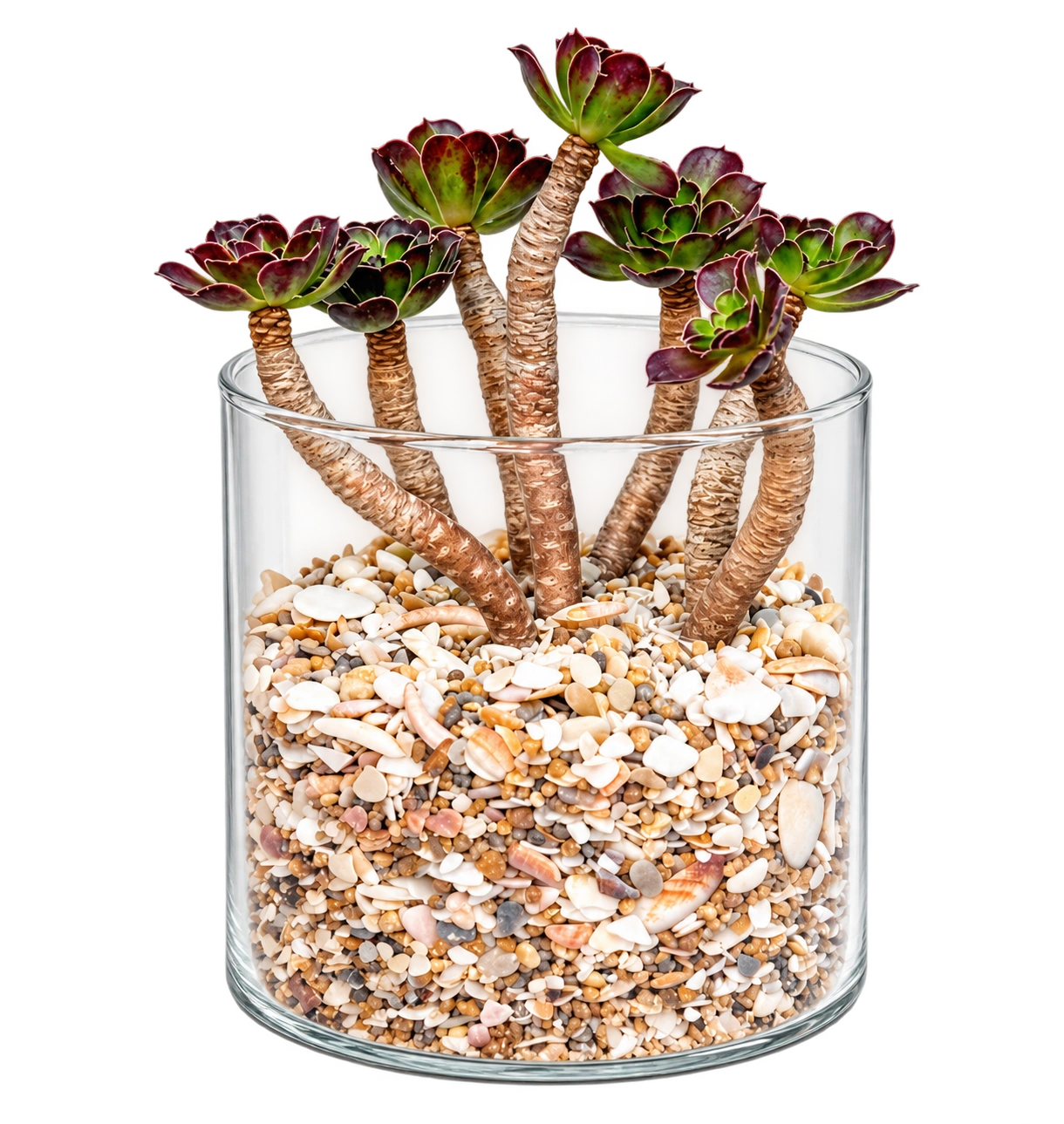
A succulent is not one particular species
Succulents store water in fleshy tissues, usually their leaves or stems. They belong to different plant families rather than one single botanical group. Those reserves help them survive dry periods, but they still need suitable light, water and growing conditions. A label that simply says “succulent” is not a complete care guide.
Cacti are included among succulents, but a succulent does not have to be a cactus or have spines. It may form a rosette of leaves or resemble a small branching shrub. That gives you many more options for a home or gift than the familiar round cactus.
Ask three questions before choosing
Where will it stand? Look at the intended position throughout the day. A shelf deep inside a room does not receive the same light as the nearby window. If the corner is dark, reconsider the location or ask for a plant suited to the actual conditions.
What shape do you want? A tall, narrow arrangement adds a vertical line; a low rosette feels more compact. Consider the background too. A simple arrangement is easier to see against a busy room, while dark decorative filling stands out on pale furniture.
How will you water it? Ask where the growing medium sits, how to check it and what happens to excess water. The arrangement’s name tells you about its design, not its botanical identity or watering method.
A conventional pot or an arrangement in glass?
With a conventional pot, the compost and drainage openings are usually easier to inspect. In glass, shells and stones become part of the display. Our new arrangements contain a capsule of growing medium in which the plant grows, surrounded by decorative filling. This does not establish that the glass has a drainage hole or that the capsule is removable. Ask for instructions for the particular construction when ordering.
A Touch of the Sea, with seashells offers a starting point for a pale, warm palette. Its vessel is 14 cm high and 7.5 cm wide. Black Lava, with black volcanic tuff creates contrast in a 12 × 5 cm vessel. Natural Mosaic, with decorative gravel uses a smaller 9 × 6 cm vessel. These measurements describe the glass, not the full height of the plant.
When your plant arrives
Take a moment to inspect the leaves, the plant’s stability and access to its growing medium. Photograph it on the first day so that later changes are easier to notice. Keep the care instructions, and request a botanical identification if a particular species matters to you. Living plants can vary slightly from the photograph in shape and colour.
A gift with a place to live
A small arrangement can make a thoughtful housewarming gift or an addition to a bright desk. Think of an actual location in the recipient’s home and include the watering instructions for that vessel. This makes the gift easier to enjoy as part of everyday life.
Once you have chosen, read our guide to succulent care at home. For backgrounds and placement, explore decorating with succulent arrangements in glass.
Botanical background: University of Minnesota Extension: cacti and succulents.